













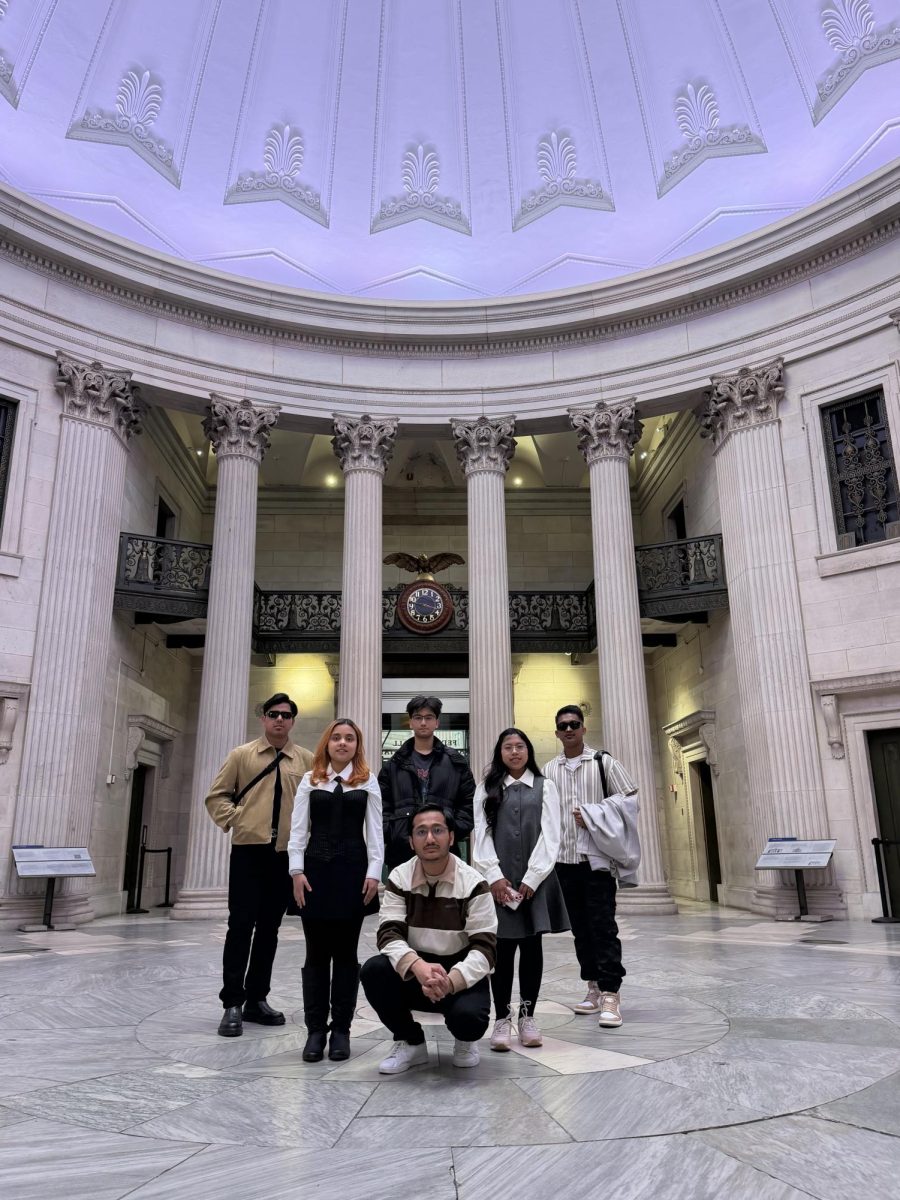








I was one of a small group of college students selected to tour the New York Times. Before the tour began, Bill Ruthhart, an editor for the NYT, had a Q&A session with the group of students attending the College Media Association Convention.
The Q&A took place in a comfortable conference room at the heart of the newsroom. We were able to ask questions about the order of operations the NYT takes to publish news, what a career in journalism looks like, and even personal questions about finding our calling in the field.
Ruthhart shared that “It can be a pressure cooker of a job.” He said in this field it is really about finding the work life balance that works for us. Some people love to continuously write in and out of the job, others need time away to focus on their families or hobbies.
I asked Ruthhart if there were any driving circumstances from one’s environment, how they grew up, or rather just a passion for journalism that influences people to end up with this career. He told me, “I’ve seen people from different lived experiences and perspectives who are passionate about journalism for all sorts of reasons. The more people in the newsroom with different backgrounds and interests makes a bigger difference and a better story.” I found this to be full circle as 15 students from different states and colleges of varying ages and talents sat in the conference room imagining their futures.
After the Q&A, we were given an intimate tour of the NYT headquarters.. We got to see the multiple levels of the newsroom and how each floor is broken up by category. The second floor is for audio and visual, the third floor houses the main newsroom (politics and global events), and the fourth is for business and features.
We silently passed through the lounge areas where employees reset and had lunch. Finally, on the 15th floor there was a museum of archival artifacts from events in American history along with Times issues that were published when they happened.
It was surreal to see scraps from war to bulletins of celebration, paired of course with the most significant publications of those historical events front page and center. The hallway leading up to the museum had placards of all the Pulitzer Prize winners.
At the end of the tour, we learned of the tradition that whenever a president visits the Times they sign a photo of themselves to add to a gallery on a hallway wall. The one that stood out the most, and perhaps the most humorous, was from President Nixon.
“To the New York Times,
Some read it and like it,
Some read it and don’t like it.
But everybody reads it.”
–Richard Nixon
I had a gratifying experience at the New York Times. It was amazing to connect with other students different interests in journalism and scope out what the future could look like for us. Not to mention insanely awesome to have a backstage pass to one of the largest news outlets in the world. It was truly an amazing experience that I will never forget.
