















































The Metropolitan Museum of Art (Met) is a place I would describe as a real-life maze, filled with historic figures, religions, and cultures that no one can forget.
The Egyptian Art
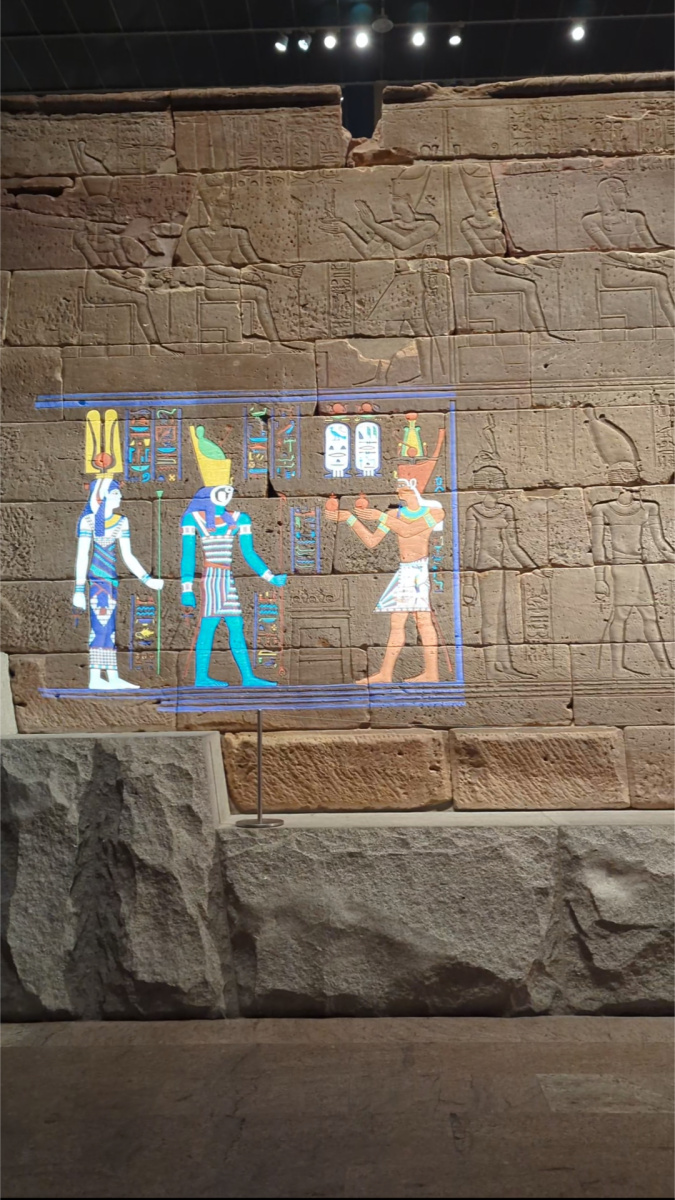
Imagine, as you walk through the museum after seeing the Greek and Roman Art, you step into another exhibit, and suddenly it feels as if you’ve traveled back to Ancient Egypt. As I saw the temple, the carvings on its wall showcased by a lighting display, revealing a scene of the Roman emperor Augustus, depicted as a Pharaoh, making an offering to the Egyptian deities Horus and Hathor. As I walked through the exhibit, I noticed sarcophaguses (stone coffins or burial containers) displayed, in which mummies were laid.
As I continued walking through Egypt, I began to wonder, How were Americans able to acquire these historic pieces? If these pieces are here, then what remains in Egypt, and does this all reflect not only historic moments but possibly colonization as well?
Native Americans
When it comes to learning about American history, I sometimes feel like we overlook Indigenous people. In school, when we do learn about them, it’s usually limited to how they welcomed the Europeans, and then the lessons just end there. Walking through the Native American Exhibit at the Met opened my eyes. I was amazed by the clothing, tools, and weapons on display, and by the materials they were made from. The majority of their clothing came from a wide variety of animals, plants, and other natural resources. I believe schools should take a stronger approach in teaching Native American history and their culture.
Learning and Respecting Others’ Religions
I grew up Christian my entire life, and I was raised to respect and educate myself about other people’s religions. When I attended a private Christian school, it often felt like Christianity was presented as “The good religion,” while others were talked about negatively. It gave me the impression that Christianity was the only “best” religion. Walking through the museum changed that perspective. As I explored the different religions, I realized there is nothing harmful about being Islamic, Hindu, or Buddhist. Their teachings focus on worship, doing good deeds, and being kind to one another.
As someone with friends who practice different religions, such as Islam or Taoism, I’ve learned that just because they do not want to become Christians, it does not mean that criticizing them is going to change anything. At the end of the day, our shared goal is to treat one another with kindness.
All in all, I think museums like the Met are great places for people of all ages to learn by seeing history up close and exploring different cultures and religions. The way I can describe the museum is a real-life history book that you can walk through, giving visual learners a more meaningful understanding.